
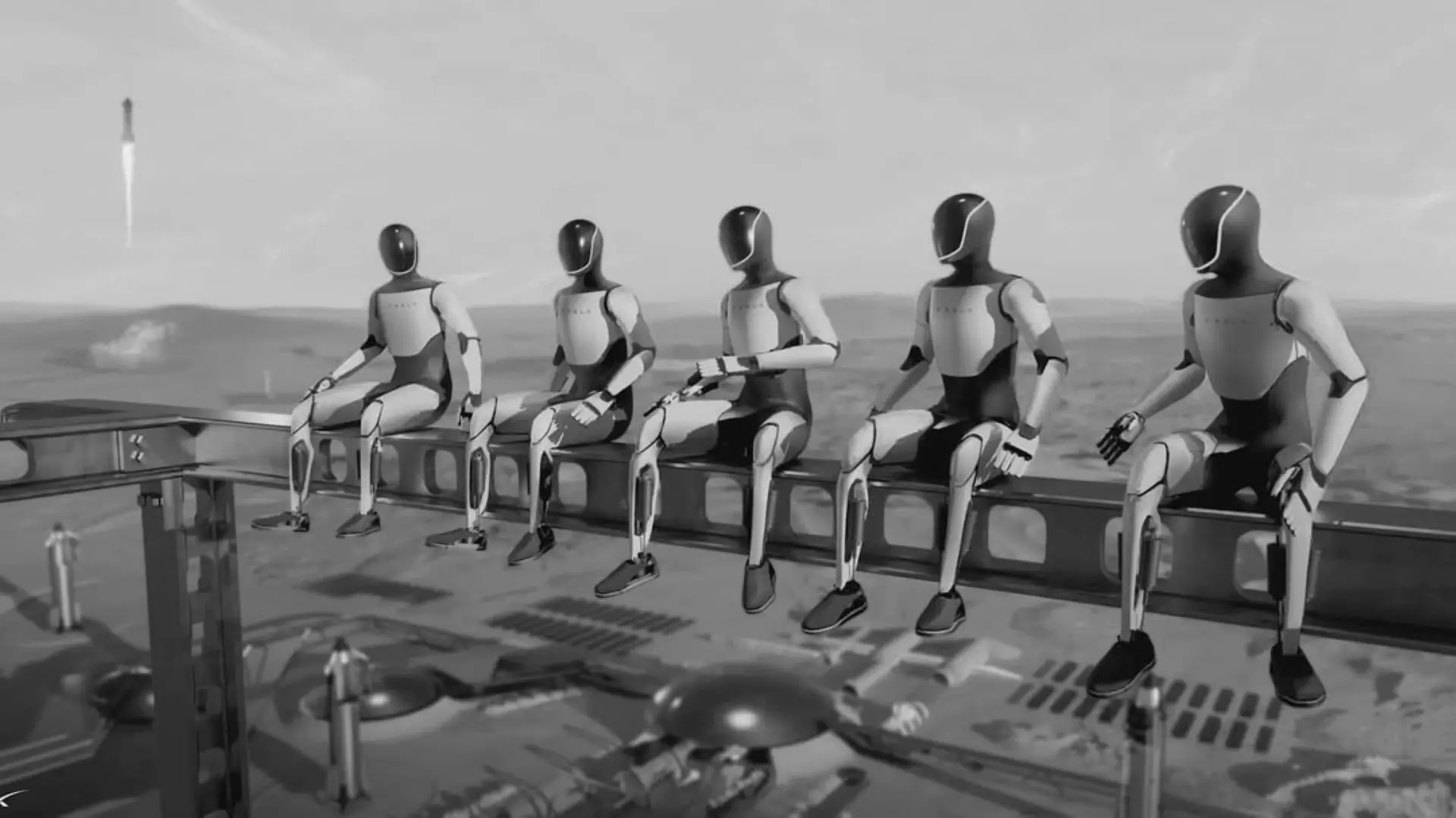
Tesla’s leadership in humanoid robotics is often treated as a foregone conclusion. But manufacturing prowess, AI ambitions, and Elon Musk’s vision are not proof of robotics leadership. Strip away the hype, and five vulnerabilities stand out.
1. Manufacturing scale doesn’t guarantee productive robots. Tesla knows how to manufacture cars at scale. Humanoids are a different engineering challenge. In September 2026, The Information reported production difficulties involving Optimus’s hands, suppliers, and automated equipment. Production capacity is not productive capacity. The real measure is how much useful work a robot can perform reliably and autonomously.
2. General-purpose autonomy remains unproven. Performing a trained task is not the same as adapting to unfamiliar situations, recovering from failures, and working without task-specific programming. The real test isn’t whether Optimus can perform a demonstration. It’s whether it can handle what the demonstration doesn’t show.
3. Competitors are building operational track records. BMW reported that Figure 02 supported the production of more than 30,000 BMW X3 vehicles, handling over 90,000 components across approximately 1,250 operating hours. Agility Robotics reports more than 65,000 operational hours across customer sites. These figures do not prove that either company has solved general-purpose robotics. But they provide evidence of real-world industrial operation. Tesla’s manufacturing ambitions are substantial. Its publicly demonstrated industrial productivity remains a different question.
4. Dexterous manipulation could become a critical bottleneck. Walking makes a compelling demonstration. Manipulation makes a robot useful. Handling tools, inserting components, grasping unfamiliar objects, and recovering from failed attempts require precise control, sensing, and reliable hardware. Reported difficulties with Optimus’s hands are therefore more than a manufacturing inconvenience. They constrain both reliability and the range of work the robot can perform.
5. The industry is measuring the wrong thing. Production targets, demonstrations, and company valuations do not establish commercial success. The metrics that matter are productive hours, task success rates, failure recovery, maintenance, supervision, and cost per completed task. The winning system will be the one that delivers the work most reliably and economically not the one that looks most human.
Tesla’s eventual dominance is an assumption, not an established fact. The bigger opportunity lies in the intelligence and operating infrastructure that makes physical work executable, measurable, and reliable across different robots and human workers. Building the robot is one challenge. Making physical work actually work is the bigger prize.