
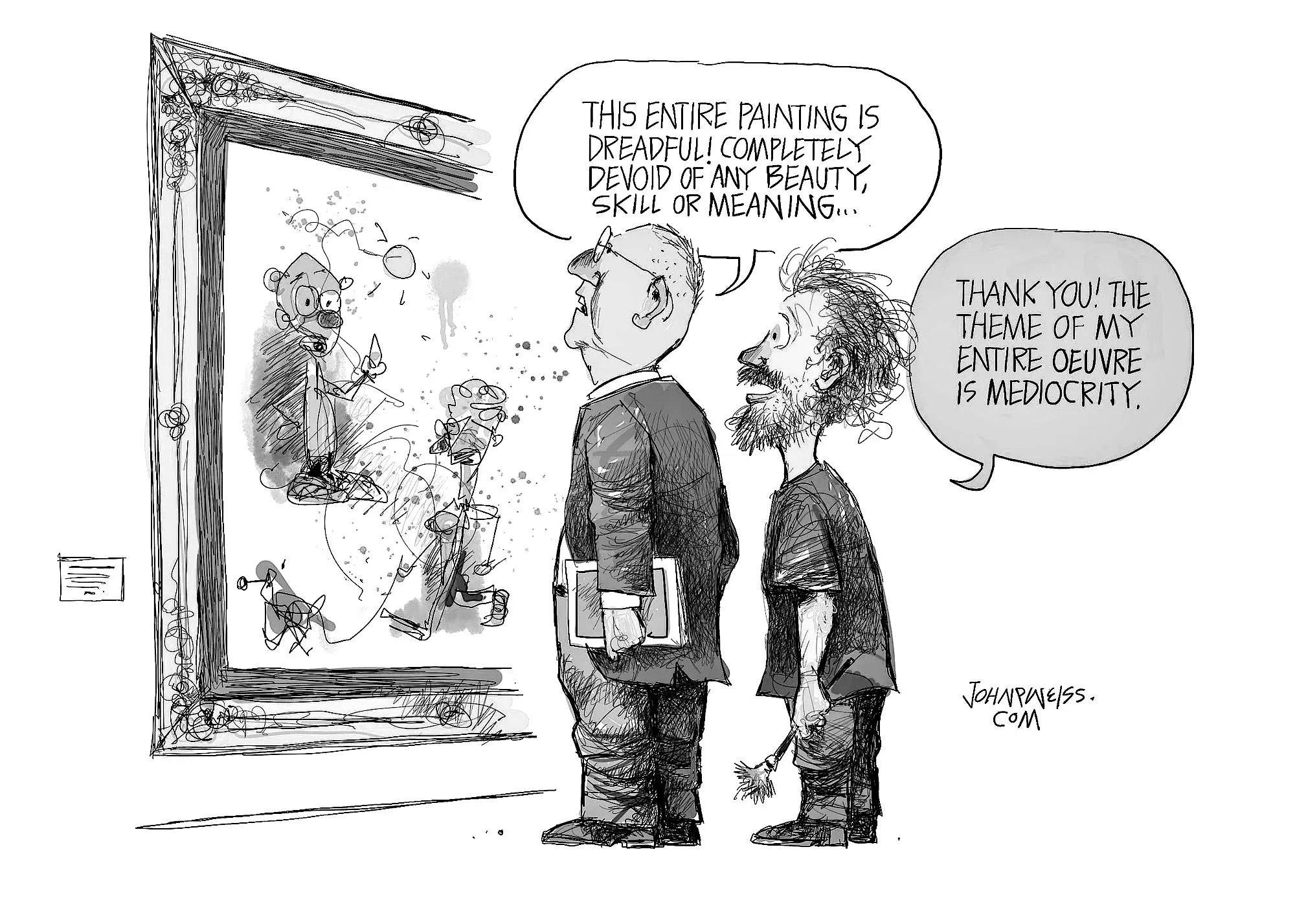
What happens when we start treating the mediocre as extraordinary, while treating the extraordinary as nobody? The problem isn’t that mediocrity exists. It always has. The problem begins when our systems lose the ability to distinguish excellence from its appearance.
We see it everywhere. In organizations, those who create value can be overlooked by those who present it well. In academia, original ideas can lose out to work that reinforces the existing paradigm. In technology, builders can be overshadowed by those who are better at talking about what others build.
We increasingly confuse benchmark performance with intelligence, visibility with expertise, confidence with understanding, followers with authority, and impressive applications with genuine breakthroughs. None of these things are inherently bad. They matter. But they are proxies. The danger begins when the proxy becomes more important than the thing it was meant to represent.
Someone spends years solving difficult problems and speaks cautiously about what AI can and cannot do. Someone else confidently predicts AGI is just around the corner and builds a huge audience around it. Often, certainty is simply easier to consume than nuance. The same inversion happens inside organizations. Challenging assumptions gets labelled “difficult”, protecting the status quo gets called “reliable.” Slowly, conformity becomes leadership. And then mediocrity becomes self-reinforcing.
Those who succeed within the system become the people deciding what the system should reward next. Meanwhile, extraordinary people don’t necessarily become less extraordinary. They simply become harder to see. Some build elsewhere. Some continue creating without recognition. And that raises a more uncomfortable question. Are we actually becoming better at recognizing excellence or simply better at recognizing what looks like excellence?
Genuine excellence is rarely guaranteed to be obvious. It can be unconventional. It can arrive too early. It can challenge consensus. It can be difficult to measure. Sometimes it begins with a question nobody else thinks is important.
This matters in the age of AI. We are building machines increasingly capable of finding patterns, extracting signal from noise, and distinguishing meaningful information from superficial correlations. Yet our own institutions can still struggle to distinguish substance from performance, originality from imitation, competence from confidence, and excellence from its appearance.
The greatest irony is that we may build systems where intelligence is valued less than the appearance of intelligence. When mediocrity is repeatedly rewarded as excellence, excellence doesn’t disappear. It becomes invisible. And civilizations don’t decline because extraordinary people disappear. They decline when extraordinary people can no longer find a place to contribute.