
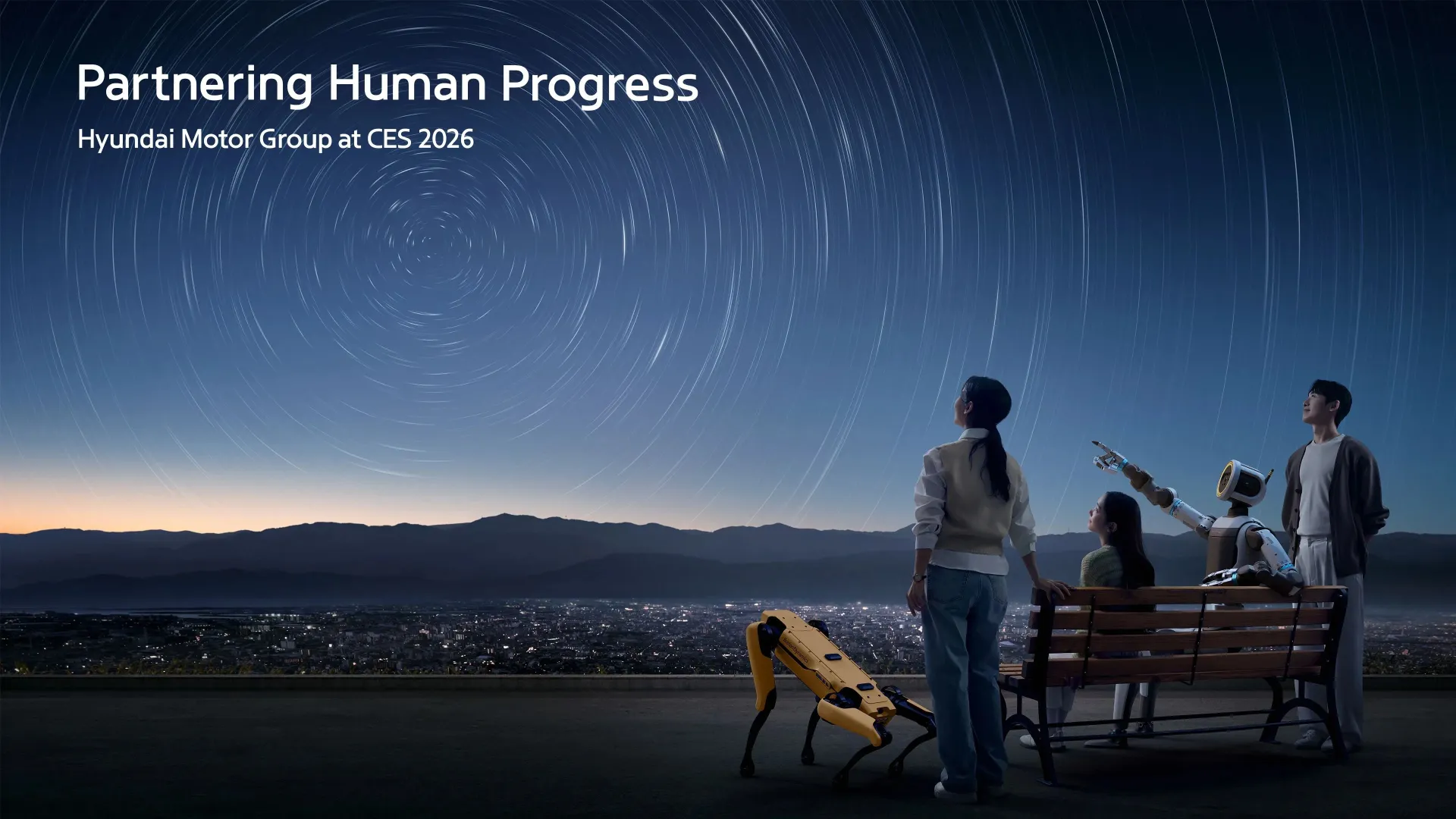
Let me start with the most important part. Hyundai Motor Group’s upcoming CES 2026 showcase is significant. Under the theme “Partnering Human Progress” the company plans to unveil a group-wide AI Robotics Strategy focused on human–robot collaboration, manufacturing innovation, and commercialization pathways across its value chain.
At the center of this narrative is Boston Dynamics’ next-generation Atlas humanoid robot. Hyundai frames this as a tangible step toward commercializing AI robotics and building safe, adaptable robotic co-workers. Treating robotics as a system problem spanning hardware, software, factories, safety, and operations is exactly the right approach. Atlas, in particular, remains an extraordinary research platform for mobility, manipulation, and whole-body control. Anyone who has built physical systems knows how hard that is.
Where things start to go wrong is not the engineering, but the storytelling. Much of the coverage frames the CES appearance as humanoid robots “leaving the lab” and “entering real-world deployment”. That language sounds exciting, but it quietly talks past anyone who understands systems, constraints, or physics. A stage demo is not deployment. A choreographed sequence is not reliability. In reality, what Hyundai is doing well according to its own strategy materials is far more grounded focusing on controlled, industrial use cases, integrating robots into workflows and factories, and aligning robotics development with its Group Value Network and Software-Defined Factory (SDF) approach. That’s how robotics actually progresses methodically, and often invisibly.
The problem with hype isn’t optimism. It’s the false equivalence between demonstration and readiness. When phrases like “scaling tens of thousands of robots” appear without clear operational metrics, uptime expectations, or economic pathways, the conversation drifts away from reality. Over-promising distorts expectations, forces engineers to defend physics against marketing narratives, and sets the industry up for disappointment cycles that delay real progress. Hardware does not move at narrative speed and pretending otherwise doesn’t make it move faster.
Bottom Line
AI-driven automation will reshape industry but only through harmonious integration, proven reliability, and deep respect for constraints, not spectacle. Robotics will not succeed beyond conference halls without honest leadership, it demands clear vision, pragmatic execution, and the willingness to have uncomfortable conversations instead of hiding behind cinematic headlines, slogans, and teaser images. Progress doesn’t come from ignoring limitations. It comes from engineering within them.