
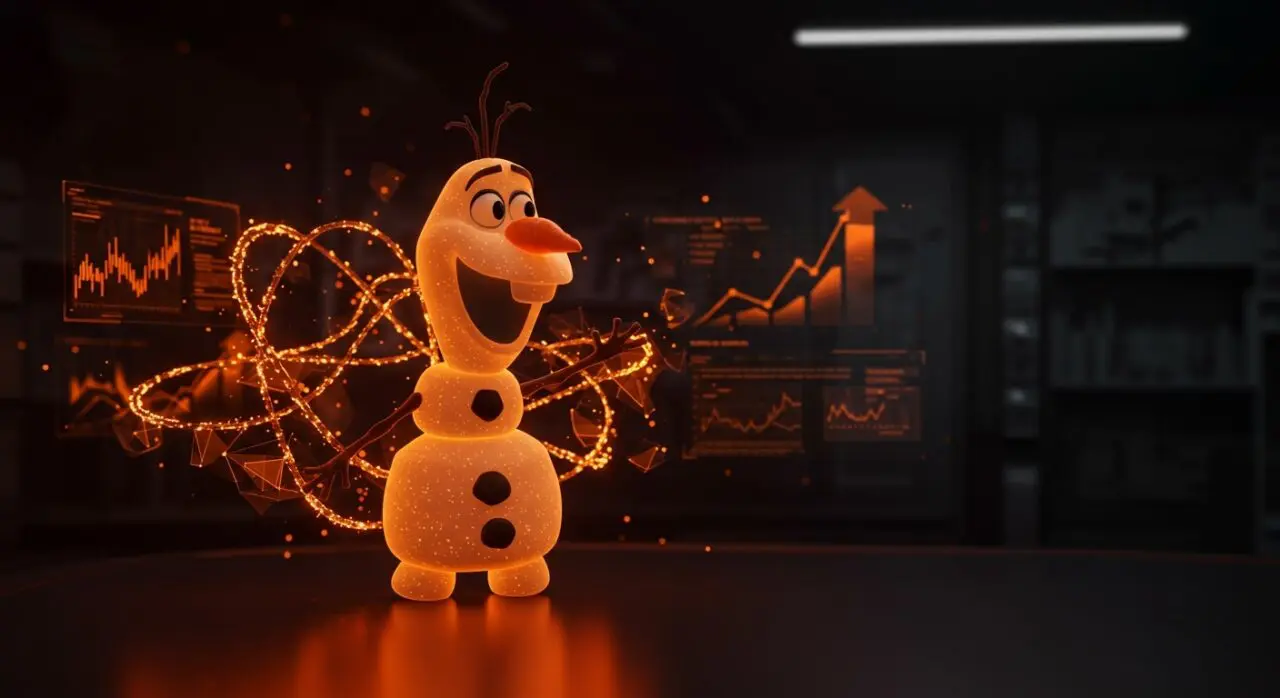
The robotics industry is entering a new design era built on a powerful belief, “acceptance comes from affection.” Soft bodies, rounded edges, expressive faces, playful motion. Machines engineered not to intimidate, but to invite. From emerging robotics startups to Disney’s “Olaf” robotic character, the shift is clear.
The reasoning is understandable. If robots are going to share our homes, hospitals, and public spaces, they cannot feel like industrial equipment. They must feel safe, social, and emotionally approachable. But beneath this well-intentioned philosophy lies a paradox. When emotional design outpaces functional capability, affection turns into frustration. Frustrated hardware does not become beloved. It becomes ignored, sidelined, and eventually discarded.
The problem is that likability does not equal usefulness. We have seen this pattern before with social robots and voice assistants that were delightful at first but rarely essential. When novelty fades, only utility remains. The danger is psychological as much as technical. When a robot looks socially intelligent, people assume functional intelligence. They expect competence, reliability, and meaningful assistance. If the robot cannot consistently deliver real value, its friendliness backfires.
Compounding the issue is that many of these systems are introduced as platforms first, and only later as products. That model worked for smartphones because apps operate in digital space. Robots operate in physical reality, where unpredictability, safety constraints, and environmental variability dominate. Without a clear set of reliable tasks, even the most charming robot risks becoming an expensive experimentation tool rather than an indispensable product. People do not emotionally bond with platforms, they bond with problems solved.
Human-robot interaction becomes exponentially harder outside controlled demonstrations. In the real world, social cues are misread, context is misunderstood, movements feel unpredictable, and responses seem inappropriate. Cultural signals that feel friendly in one place may feel unsettling in another. People tolerate mistakes from other humans, but they are far less forgiving with machines. This is the psychological trap of lovable hardware. When those human-like expectations break, delight turns into disappointment, and disappointment into rejection.
The path forward is not to abandon lovability, but to reposition it. Lovability should be the interface, not the product. The robots that succeed in shared human spaces will prioritize utility before personality.
Bottom Line
Trust in machines is built on consistency, not charm. People don’t stay loyal to robots that smile, they stay loyal to robots that work. When hardware fails both emotionally and functionally, it doesn’t get a second chance. It becomes e-waste.