
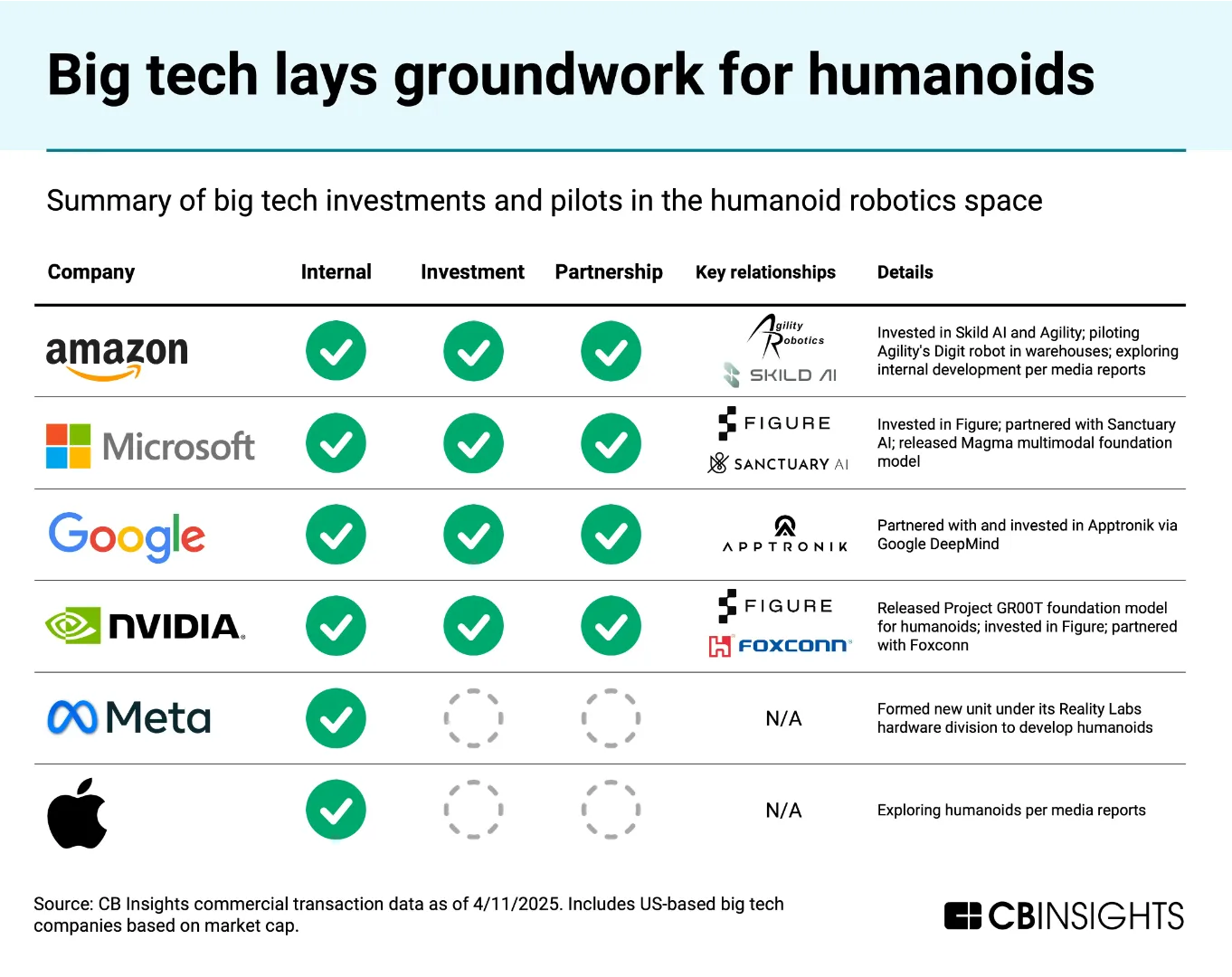
Humanoids are having their “autonomous-driving moment.” Everyone claims general-purpose robots are “just one breakthrough away.” But behind the hype lies a harder truth, from Tesla to DeepMind, the industry is building humanoids on biased assumptions, copy-paste AI, and leadership tunnel vision. Almost no insider is willing to challenge the narrative. Here’s why the current path is fundamentally flawed and what real progress actually demands.
- Scaling Up AI ≠ Scaling Up Embodied Intelligence
Big tech assumes robots will follow the LLM playbook, more data → bigger models → emergent behavior. But robots can’t scrape internet-scale experience. A robot folding laundry must actually fail, mis-grasp, tear fabric, fight friction. You can’t simulate that away or tokenize it. Physical intelligence cannot be brute-forced. - Teleoperation Isn’t the Path to General Robots
The dominant trend is “Teleoperate robots for thousands of hours and make them imitate us.” This produces imitation machines not reasoning agents, not autonomous explorers. Teleop data doesn’t scale to general behavior, and every demo proves it. Robots just replay what a human taught them. Nothing more. A general robot must self-discover, not mimic. - “Internal Monologue” ≠ Real Reasoning
Robots narrating their thoughts (“I will now pick the sponge…”) looks magical. In reality it’s UI theatre, not cognition. A robot verbalizing a plan still doesn’t understand torque, doesn’t reason about friction, doesn’t predict failure, doesn’t simulate counterfactuals. Language ≠ physics. Reasoning ≠ narration. - Humanoid Design Is a Creative Dead End
The uncomfortable truth, we desperately need new designs, yet big tech design teams keep recycling the same outdated humanoid template. It’s design-by-habit, not design-by-thinking. It needs radial designers who can rethink forms, functions, feelings, and futures from first principles. - Hardware Is the Bottleneck
Today’s robots suffer from stiff actuators, poor energy density, and slow, inefficient movement. No AI model not even a trillion-parameter can compensate for a robot that can’t hold a drill without shaking. Software can’t fix dirty-hands physics. - Over-optimistic Timelines Might Trigger a Robotics Winter
“General humanoids in 3–5 years.” “Home robots by 2027.” These predictions echo the early self-driving era. The result then overhype → disappointment → layoffs → freeze in funding. The same outcome is brewing in robotics unless the field resets its expectations and scientific foundations.
Bottom Line
LLMs won’t create general-purpose robots. Only breakthroughs in physical intelligence, causal world models, self-learning, radical new designs, and next generation hardware will. Until then, we’ll keep getting more demos not real progress.