
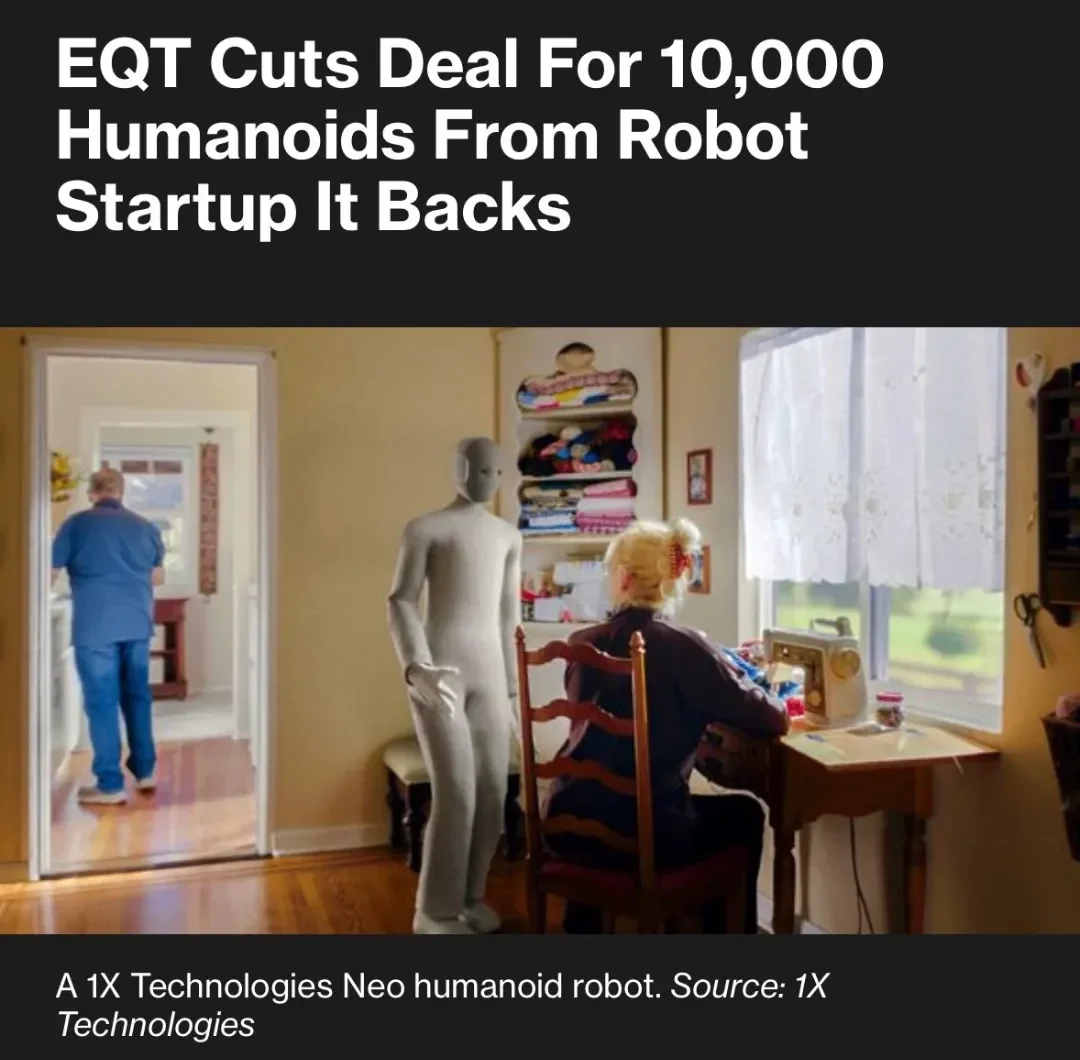
The “10,000 Humanoids” Headline, Why We Must Stop Confusing Potential With Deployment
The announcement about EQT, the Swedish investment firm, “deploying up to 10,000 humanoid robots” with 1X Technologies for the NEO caught my attention. As someone who has spent years commercializing deep-tech systems from advanced materials to industrial hardware, I’ve learned to separate headline enthusiasm from execution reality. Let’s cut through the noise.
“Up to 10,000 units” is not a deployment plan, it’s an aspiration.
Nothing in the announcement indicates binding purchase orders, validated industrial use cases, proven autonomous performance at scale, or integration commitments from EQT’s portfolio companies. It is a pipeline projection, not demonstrated demand. When leaders blur the line between potential and deployment, expectations get distorted and ecosystems get misled.
Humanoids are exciting, but they’re not production-ready replacements.
True industrial readiness is measured by hard metrics, not marketing. Traditional industrial robots operate at >60,000 hours MTBF (Mean Time Between Failure). Humanoids are nowhere near this benchmark. Many current humanoids still require significant human teleoperation (“Expert Mode”). Autonomous task-completion rates remain far below industrial thresholds. Factories expect automation cells to integrate within 3–8 weeks. Humanoid systems today require extensive tuning, training, and ongoing remote oversight. Industrial customers typically demand payback <24 months. Early humanoid deployments rarely meet this without substantial operator intervention. This isn’t criticism, it’s the normal trajectory of emerging robotics. But it is not the basis for a “10,000-robot deployment horizon.”
Hype without metrics has real consequences and the history is clear.
We’ve seen this pattern before. Rethink Robotics struggled after early hype outpaced real-world performance. SoftBank’s Pepper was discontinued after deployments failed to deliver expected utility. Numerous warehouse automation moonshots gained media attention but never survived the transition from demo to daily operations. The results are predictable. Overstated readiness → Slow adoption → Delayed revenue → Investor write-downs → Credibility erosion. When commercialization narratives run ahead of engineering and operational reality, both startups and investors pay a steep price.
Bottom Line
Humanoid might become a meaningful pillar of the next industrial revolution. But transformation doesn’t come from inflated headlines. It comes from validated performance, transparent metrics, disciplined engineering, and honest communication. We don’t need bigger numbers. We need better data.