
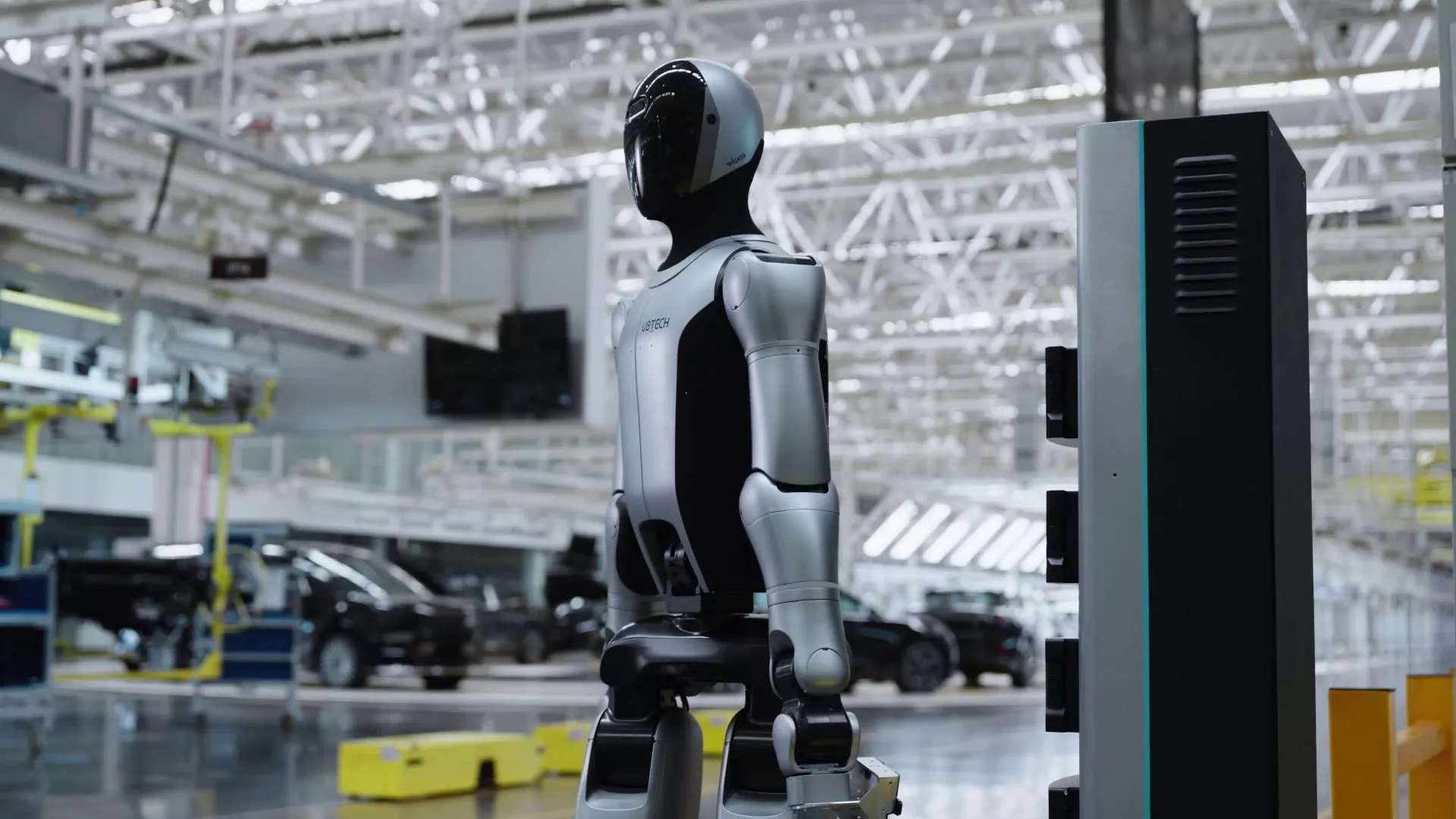
According to recent reports, Texas Instruments is deploying UBTECH’s Walker S2 humanoid robots in its fabs, framing the partnership as a “symbiotic supply chain.” From an industrial and CEO perspective, this raises more concerns than confidence.
Companies like TI win by serving large, proven markets. They design silicon for scale, long lifecycles, and predictable demand, shipping in the millions to billions of units per year. Humanoid robotics does not operate at that scale today. Global humanoid robot shipments will remain in the low thousands annually. Most deployments, including Walker series, are pilots, demos, or supervised trials, not revenue critical operations.
Now consider the environment where these robots are being deployed. Semiconductor fabs target >95% OEE. Downtime can cost $30,000–$100,000 per hour. Reliability expectations often exceed 99.999%. Humanoid robots are nowhere near this threshold. Mean time between failures is measured in hours or days, not months. Energy consumption is 3–5× higher than task-specific automation. Payload-to-weight efficiency is often below 10%, compared to 50%+ for industrial robot arms. In this context, deploying humanoids inside fabs does not solve any problem. It replaces deterministic automation with probabilistic systems. That is a poor trade-off by any industrial standard.
The supply-chain logic is equally fragile. TI supplies components to UBTECH. UBTECH deploys robots at TI sites. This is presented as mutual validation. In reality, if humanoid adoption does not scale, the risk flows upstream. TI absorbs opportunity cost by aligning engineering effort to a niche, speculative market. Component roadmaps begin to reflect future narratives rather than proven volume demand.
For UBTECH, the risk is different but just as real. Production is being scaled ahead of validated customer ROI. Supplier partnerships are used as signals of market readiness. Low-volume deployments are framed as industrial adoption. This creates a feedback loop of false confidence. Pilots become proof points. Proof points justify scale. Scale is attempted before real demand exists. We have seen this pattern before in solar, EVs, and consumer IoT. The outcome is often excess capacity, margin pressure, and stalled adoption.
True supply-chain symbiosis works only after demand is proven. Volumes must be predictable. Standards must be stable. Multiple customers must justify the same roadmap. The issue here is sequencing. Real industrial value is built bottom-up with reliability before embodiment, economics before scale, and customers before partnerships.
Bottom Line
When partnership is made to showcase confidence rather than meet real demands, narrative replaces fundamentals. And, in industrial ecosystem, fundamentals always win in the end.