
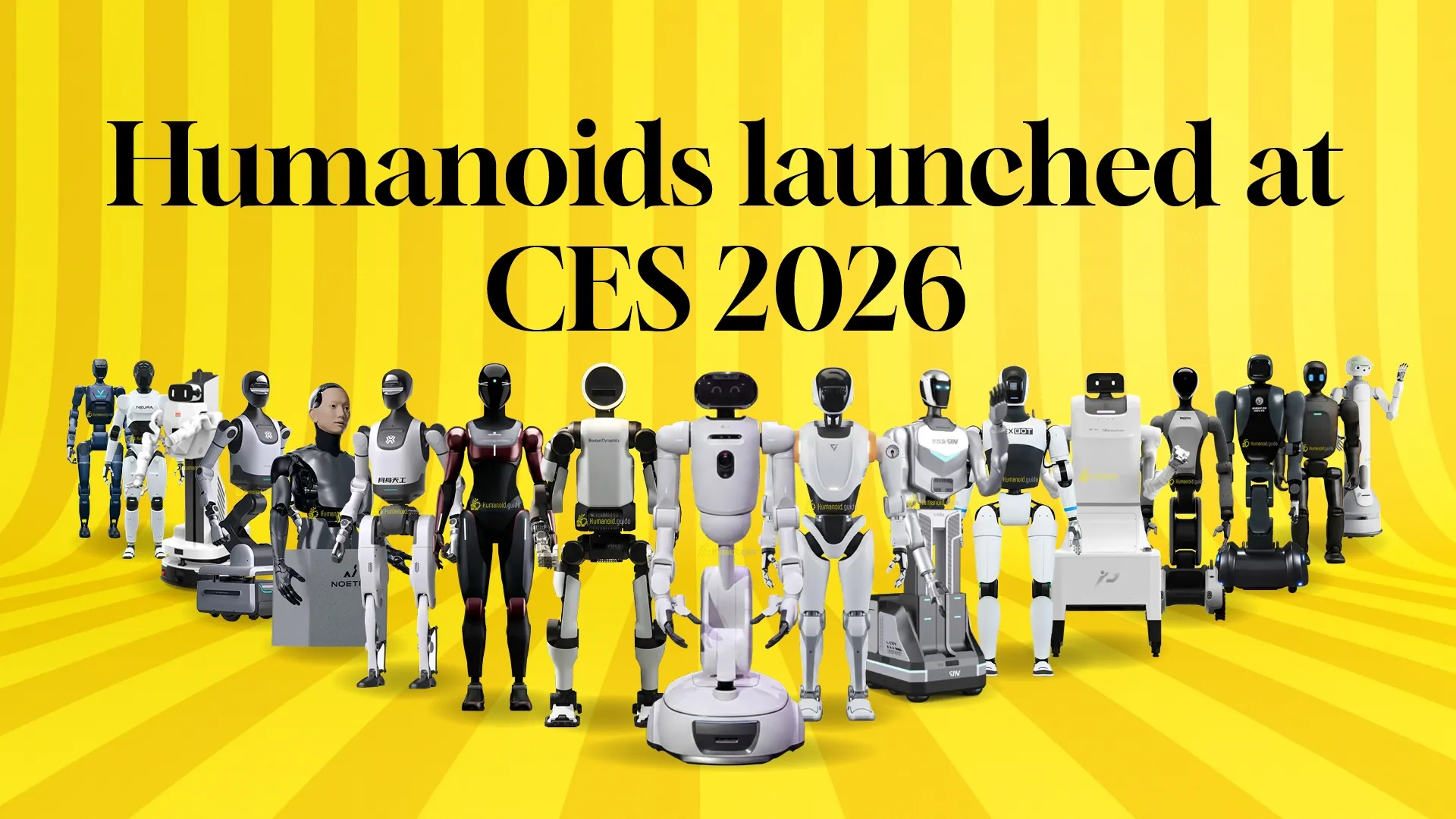
Image courtesy of Humanoid Guide
This was the first year where humanoid robots were not just shown, but positioned for deployment. Factories, warehouses, hospitals, and homes were no longer “future use cases.” They were part of near-term roadmaps. This does not mean the humanoid problem is solved. But it does mean the conversation is changing.
“The Good” from demos to deployment
The strongest signal from CES 2026 was industrial readiness. Boston Dynamics’ all-electric Atlas, now backed by Hyundai, was presented not as a research project but as factory infrastructure. No theatrics. Just task execution, battery swapping, and material handling. That matters. Other players, like Apptronik (Apollo) and EngineAI (T800), also focused on repetitive, physically demanding industrial work. One company even discussed pricing openly. That is a quiet but important milestone. Pricing means intent. In homes, the shift was equally meaningful. LG’s CLOiD robot did something rare. It touched real objects. Laundry. Dishes. Kitchen items. It was slow and not perfect, but it was practical. The lesson was clear. Robots do not need to do everything. They need to do a few things reliably. SwitchBot’s Onero H1 followed the same logic. Limited scope. Wheeled mobility. On-device AI. Real chores. Less science fiction. More engineering. Useful beats impressive.
“The Bad” form and future without justification
Despite the progress, many “humanoid” robots still avoid walking. Wheels are practical, but they raise a hard question. If a robot cannot climb stairs or navigate human spaces, why give it a humanoid form at all? In factories, wheels are fine. In homes and public spaces, they limit value. Another concern was over-generalization. Some robots were positioned for factories, homes, healthcare, and retail at the same time. History suggests this rarely works. Different environments demand different levels of safety, reliability, and cost. General purpose sounds attractive. Focused purpose usually wins.
“The Ugly” hype is still loud
CES 2026 still had its share of spectacle. Martial arts demos. Expressive gestures. Social media-friendly moments. Agility is impressive. It is not a business model. A robot that cannot work a full shift, recover from errors, or operate safely around humans is not a worker. It is a prototype. There is also a growing gap between technology and governance. As humanoids move into shared spaces, questions of safety, liability, and regulation remain largely unanswered. The risk is not technological failure. The risk is loss of trust.
Bottom Line
Humanoid robots are no longer asking, “Can we exist?” They are now asking, loud and clear, “Where do we belong, and how do we fit in?”