
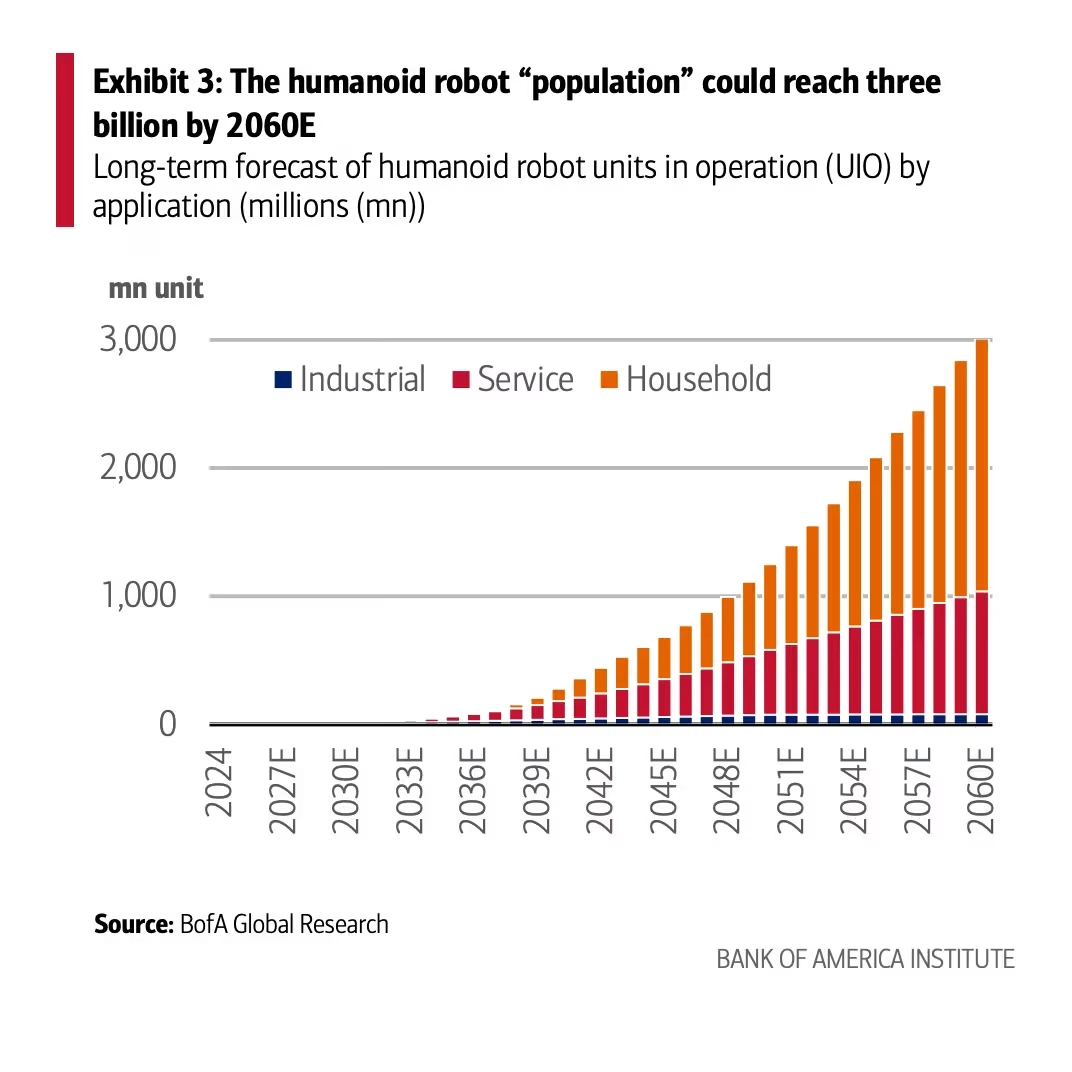
The headline figure will attract skepticism. Forecasts that stretch decades into the future rest on fragile assumptions about technology costs, regulation, geopolitics, energy availability, and social acceptance. Yet dismissing the projection outright would miss the deeper signal. Physical AI, intelligence embodied in machines that can act in the real world is approaching an inflection point that could rival electrification or the internet in economic consequence.
History shows that transformative technologies diffuse neither evenly nor predictably. Electrification took half a century to reorganize industry, computing required decades to escape laboratories and corporate data centers. Robotics will likely follow a similar arc. Humanoid systems will first prove themselves not in homes but in constrained, high-value environments where reliability matters more than versatility like factories, warehouses, infrastructure maintenance, hazardous operations, and elder care. In these settings, the economics are already compelling. Labor shortages, aging populations, and rising safety standards are creating demand for machines that can work continuously, precisely, and without risk to human life. The true disruption will come not from wholesale job replacement but from redefining what human labor is for.
The assumption that most robots will ultimately reside in households is far more uncertain. Homes are the most complex environments humans inhabit. It is cluttered, dynamic, emotionally charged, and legally sensitive. Moreover, households are not profit centers, and willingness to pay is constrained. For widespread domestic adoption, robots must deliver not marginal convenience but transformative value like independence for aging populations, enhanced safety, companionship, or substantial time reclamation for working families. Until then, the consumer market will remain niche.
Where the forecast is directionally correct is scale. Even a fraction of three billion units would imply an industrial ecosystem of extraordinary magnitude with new supply chains for batteries, actuators, sensors, advanced materials, energy, and an entirely new service economy for maintenance, software, and fleet management. For business leaders, the strategic question is not whether billions of humanoids will exist, but how intelligent machines will reshape competitive advantage.
Bottom Line
For the first time since the Industrial Revolution, humanity is poised to automate not just muscle but adaptable physical skill. Done well, this shift could free billions from dangerous and repetitive work, unleashing human potential in creativity, care, and innovation. Done poorly, it could amplify inequality, destabilize labor markets, and strain the social fabric on which prosperity depends.