
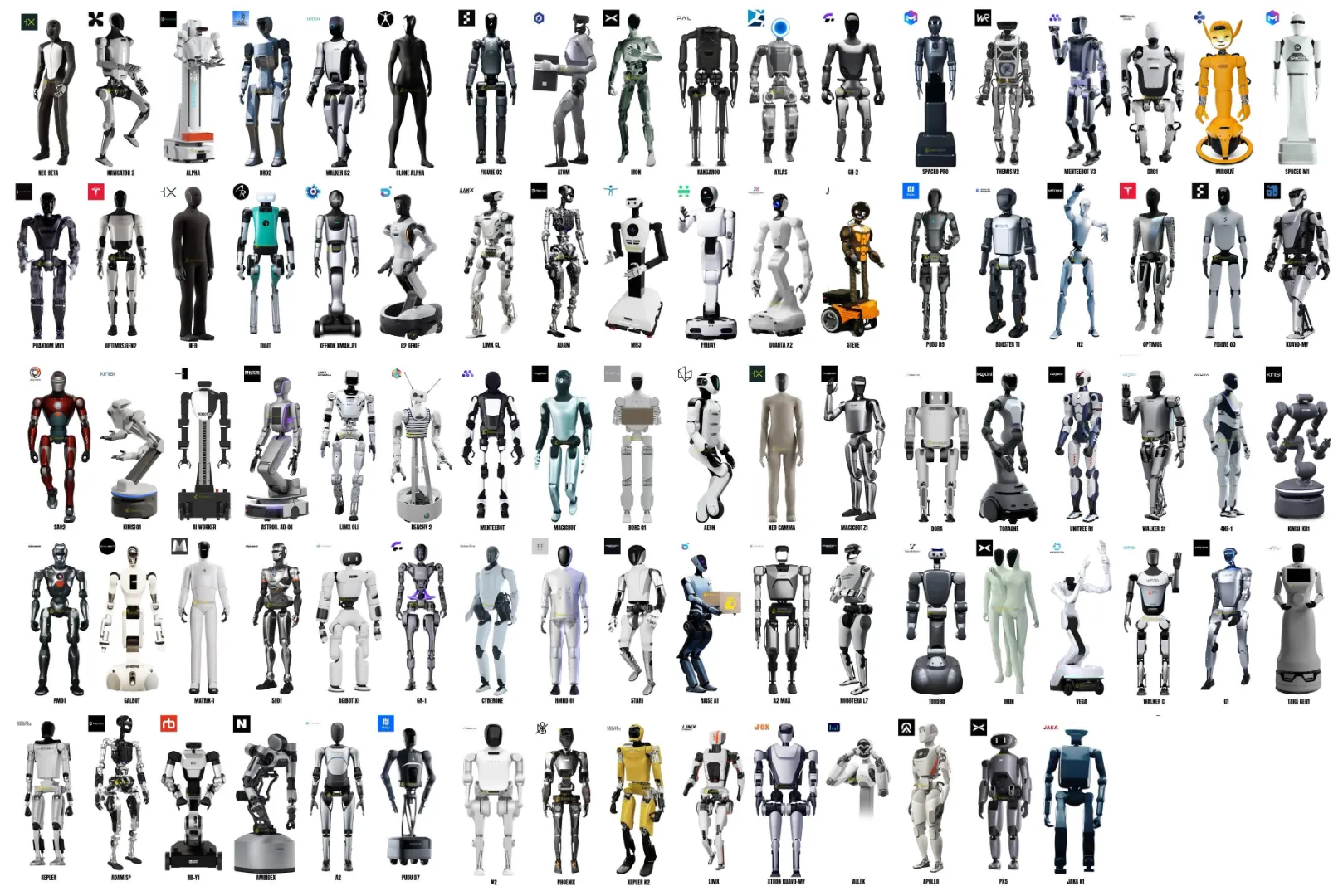
From China and Korea to Japan, the EU and the US, nations are racing ahead with new humanoid factories, fresh models and bold production targets. But one question matters more than anything. Are we focusing on the real challenges, or just the flashy 99%?
The 99% Are Hype, Hardware, Headlines, …
AgiBot in China is building a new plant in Pudong, aiming for 5,000 humanoids in 2025. UBTECH wants to scale from a few units last year to 1,000 in 2025 and up to 10,000 by 2026. Neura Robotics from EU has quietly set up a €45M subsidiary in Hangzhou. In South Korea, RLWRLD is backed by major players like CJ Logistics to build stronger “robot brains”. These moves show confidence, supply-chain ambition, and huge investment momentum. But most of this momentum is still centered on hardware, factory output and scale. It’s the 99% that makes headlines but not necessarily progress.
The 1% That Really Matters
China’s own Ministry of Industry and Information Technology has already warned the industry, too many “me-too” robots look impressive but lack real intelligence. Many humanoids can walk, but cannot understand, adapt, or reason. True value comes from the “cerebrum”, cognition, perception, context awareness, decision making. Today, most humanoids struggle with these basics. The real challenge is creating robots that can learn, adapt safely in unpredictable environments, and genuinely reduce human workload. This requires long-term investment in new designs, sensors, AI models, safety, human-robot interaction, testing, certification and regulations, not just more factories.
What’s at Stake?
For governments, pushing only for hardware risks creating a “robot bubble”, lots of machines with limited usefulness. Short-term job creation is good, but long-term value comes from intelligent, safe, human-compatible robots. For think-tanks and academic bodies, this is the time to strengthen standards, ethics, safety frameworks, and benchmarking. The 1% foundational work determines how humanoids will shape society. For entrepreneurs and investors, chasing volume without solving intelligence leads to commoditized robots, price wars, and thin margins. The winners will be those who master autonomy, reliability, and real-world use-cases, not those who just build more units. The humanoid fever is spreading but if we treat it merely as a “hardware is hard” sprint, we risk building a world full of walking and useless robots. The future belongs to those who focus on the 1% that truly matters.