
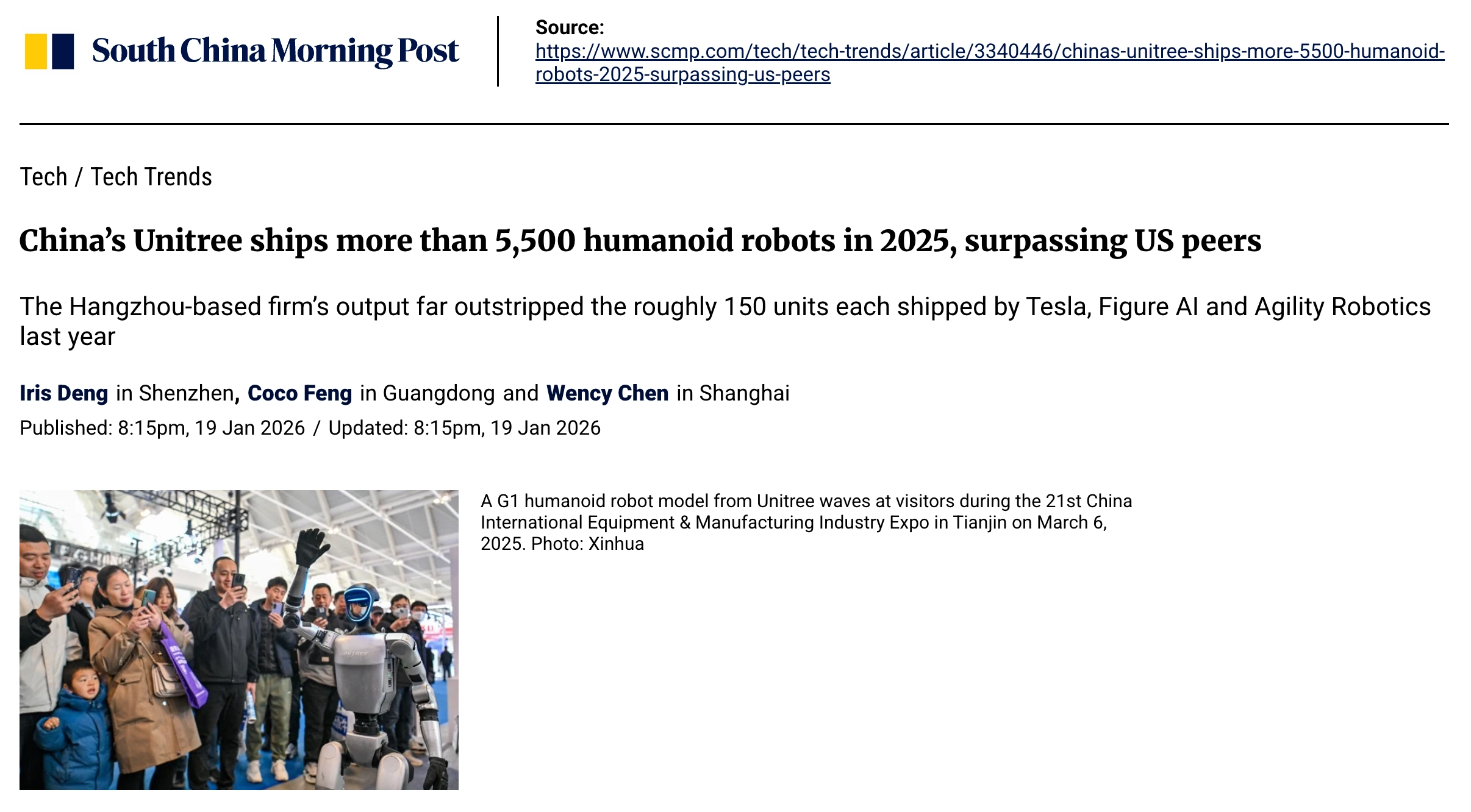
Right now, humanoid robotics sounds more like a competitive sport. Headlines read like league tables such as “ships more than,” “number one in shipments,” “production milestone achieved,” “mass manufacturing by 2026,” “race with Tesla intensifies.” Each week brings another declaration of victory in a market that, in practical terms, is still being invented. It is a storytelling race and it is being judged by the least meaningful metrics available.
In smartphones or cars, shipment volume means something. The product works. The use case is proven. Demand is real. Humanoids? Completely different story. A “shipped unit” today might be a lab platform, demo robot, subsidized pilot, and glorified showroom piece. So when companies argue over who shipped 4,000 vs. 5,000 robots, it’s mostly a debate about distribution, not utility. That’s not market leadership. That’s marketing leadership.
If the industry wants credibility beyond hype cycles, it needs a different scoreboard. The first metric is autonomous task hours, how long robots function in real environments without teleoperation, emergency resets, or engineers shadowing them. This is the mileage of robotics, and it reveals far more about maturity than shipment counts. The second is field mean time between failures, not in controlled labs but on actual job sites, where lighting changes, clutter accumulates, and conditions degrade.
Equally important is economic output per robot. What specific human task is being replaced or augmented? How many labor hours are offset? What measurable productivity gains result? Until robots generate trackable economic value, they remain capital intensive experiments rather than workforce infrastructure. The true test of general-purpose robotics is not task execution under ideal conditions, but resilience when those conditions collapse.
The industry is drifting into a narrative bubble where capital chases the most compelling demos, media rewards bold claims, timelines compress, and expectations inflate. The companies that ultimately define this field will be the ones quietly accumulating autonomous hours, driving down intervention rates, extending uptime, and demonstrating measurable economic contribution.
Humanoid robotics will not be judged by units produced and shipped, but by independence achieved measured in autonomous hours and proven in economic value.